Wednesday, 15 June 2011

Wild West

Partners, prepare to draw. Your gun, not a picture. Geez. To help you get in the mood, hit play on the below video and listen whilst you read.


The carriage creaked its way over the dusty road, horses lathered and straining in the hot air. Wheels lazily flung up thick clots of mud as the carriage slowly made its way along the pockmarked track. Hooves sucked in and out of the slurry of muddy water, a result of the sudden downpour which had occurred during the ferry crossing not an hour previously. A small village appeared around a bend in the road, and the horses whickered at the smell of livestock and civilisation. The seven inhabitants (known in these parts as the Magnificent Seven, which is a pleasant coincidence) of the carriage dozed, confident in their ability to handle any trouble in these parts with their eyes closed.


People stopped to stare as the carriage moved slowly on through the ramshackle town. This was not the Seven’s destination. Children stared wide-eyed at the silhouettes of the carriage’s inhabitants. Several young ones burst into tears and were shushed quickly by the adults. The ancient phrase ‘Kai Valagi’ was whispered between the townsfolk with a mixture of fear and awe. An uneasy quiet descended, punctuated only by the irregular clucking of hens, and the even clop of the horses’ steel shod hooves. Cookfires smoked unattended, and a sudden gust of wind sent a small (and unlikely) tumbleweed barrelling down the road. As the carriage reached the far edge of the village without slowing, tension trickled out of the shoulders of the locals, and life resumed with naught but a shadow of the carriage’s passage remaining.


The road narrowed now, as mountains reared up into sharp crags of fantastically formed rock on one side and the ocean lapped hungrily on the other. Following the contours of the land, the road led the Seven inexorably forward. They were drawing near. Light began to fade from the sky, colour bleeding into the heavens above the mountains whilst the ocean grew darker and more malicious, hurling itself violently against the crumbling sea wall. A stiff breeze flew from the ocean, whistling and wheezing through the cracks in the carriage, ruffling the horses’ manes as they pulled the Seven ever onwards.


As pink streaks of dusky cloud ran across the sky, masking the first stars as they appeared, the carriage entered Levuka. A dilapidated factory cast a baleful shadow across the road, but the Seven (and their horses) ignored it, their eyes fixed firmly on the goal ahead. A dog, nothing more than skin and bone and fleas, yapped ineffectually as the carriage rolled past.

The track widened into a proper road, lined on one side by weatherbeaten clapboard buildings and a rotting seawall on the other. In daylight the buildings were brightly coloured, but in the dim of evening they may as well have been decaying husks from a long-forgotten civilisation. The town was dead. The buildings were dark, shut up tight, and nothing but the wind could be heard as it whistled and whispered through buildings and trees alike. It was obvious that the magnificence of the Seven would not be questioned this night.

The Magnificent Seven (minus one)


The carriage came to a halt outside a sprawling homestead, an island of light and sound in a sea of near darkness. The Seven disembarked. As one, they made their way towards the entrance, their equipment clinking menacingly against their persons. Inside, lights burned warmly and conversation hovered quietly around lace-clothed tablecloths. Then, like the buzz of a fly whose life is cut short by the flick and the crack of the flyswat, everything ceased as the batwing doors were flung open. Seven Magnificent silhouettes flung lengthy shadows behind them, and silence hemorrhaged  out of them and into the saloon. The leader dropped coin on the counter sharply, eyes glinting dangerously, and the troupe of gunslingers were led to a simple but clean room reminiscent of the dormitory in Madeleine. A massacre of bedevilled mosquitoes ensued, leaving townsfolk trembling in fear and insect carcasses littering the floor.
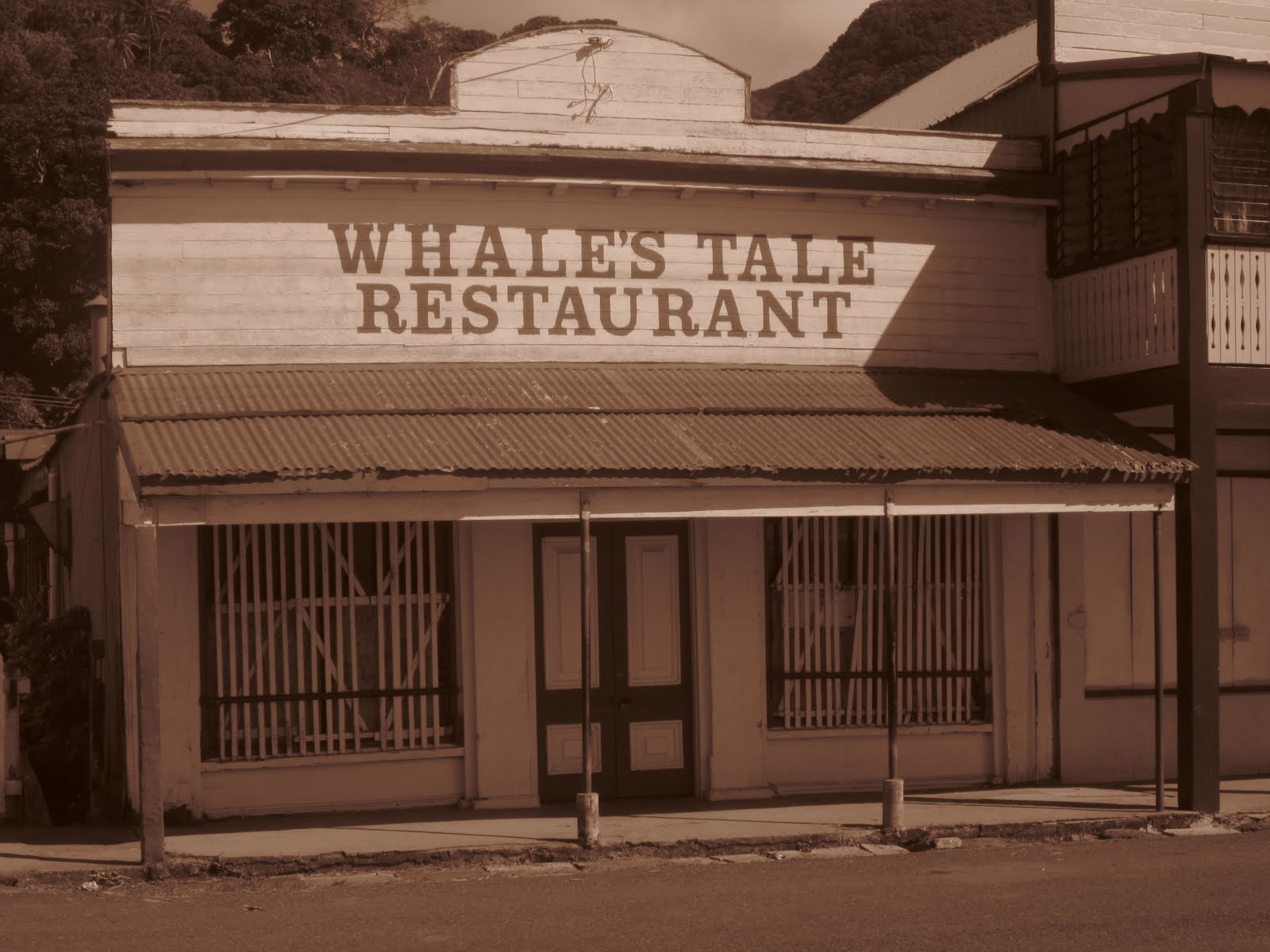

After a quiet (and menacing, always menacing) night of food and drink, the best in these parts, the Magnificent Seven woke with the town and left their lodging. Word of the Seven’s presence in Levuka had clearly spread, for even in daylight hours, the town remained deserted. Several individuals scurried past, heads bowed, as the Seven walked the town, fingers hovering over their holsters, eyes roaming and hungry. Whilst their bloodlust was not satiated, their appetites were, with a simple lunch of breakfast crackers, tomato and cheese. As they sheltered from the noonday sun under the eaves of the first ever MH store, fondness for this town grew in their hearts. They vowed to return someday to take more sustenance from Whales Tales Saloon, annihilate more mosquitoes at New Mavida Lodge, and duel any and all who would threaten Levuka’s peace. It is, after all, a Crime Free Town.


There were no horses.

Tuesday, 14 June 2011

Crossover Episode

Every mediocre show has one: an episode where two TV shows produced by the same people collide in an attempt to reignite tepid storylines and weak characters. Some examples include NCIS and NCIS: LA (I make no apologies, those shows are fairly dreadful, and let’s not forget when they tried to add a bit of JAG into the mix early on), and of course all those CSI super episodes.


Just like TV shows, blogs too can suffer from recycled material and overused plot devices. Fortunately, I was recently given the perfect opportunity to vent the stale air that’s been building around my cyberspace fortress through my very own crossover. Did you just get goosebumps? You can almost taste the high quality production values, can’t you?

"Production Value!"
 

My old supervisor, referred to henceforth as Filet (myself and another co-worker were affectionately known as her minions) from the Company Which Shall Not Be Named was in Suva doing a bit of scoping for some future development projects, and I was fortunate enough to catch up with her over the course of a weekend. It was pretty exciting having my very first visitor come to Suva almost within a month of me moving here. This was further compounded by the fact that because Filet was here for work, she had an allowance (and a generous spirit), which allowed me to eat like a king for a couple of days at no personal expense. And what food! Eggs Benedict for breakfast (reunited at last!), a mouthwatering burger with one of the most delicious ground beef patties I’ve ever consumed, and let’s not forget the cubes of deep fried cheddar cheese.


It wasn’t all take though. I gave my time, my energy, and my knowledge of Suva, and bundled it into quite an entertaining and refreshingly humourous package. And come on, I even went to Pure Fiji, some factory that makes soap and all manner of smelly stuff. If that’s not a sacrifice, I don’t know what is. But now that I’ve brought you up to speed with what’s going on this week on Steveinfeej, we can move on now to the Western edge of the Pacific, where a second blog exists and will shortly intrude upon life here in Fiji.

Introducing www.frogsfordarcy.blogspot.com. The blog was created by Filet with the truly admirable goal of entertaining a very ill kid living in Sydney. Darcy is the son of my and Filet’s old boss from the Company Which Shall Not Be Named, and has been seriously sick for well over a year now. He’s been in and out of hospital frequently during that time (more in than out in recent months), and there isn’t much for him to do other than be poked at and prodded by doctors. Filet, ever the philanthropist, began the above blog to entertain Darcy during his quarantined hospital stays, and attempts to post pictures and stories of origami frogs, one of Darcy’s favourite things, as frequently as possible.

Like NCIS and NCIS: LA, you can probably guess where this is going. Also like NCIS, you’re probably disappointed that this isn’t shaping up to be as exciting as the ads made it out to be.

That’s right, Filet brought an origami frog with her, and what followed was a very exciting weekend for said frog. It’s a little sad to think that thanks to Filet, that frog is almost as well-travelled as I am. However, in a shocking plot twist, that was not the only companion Filet brought with her to the Feej. Our old team’s mascot, known affectionately as Wooden Rob despite the fact she is very clearly a woman (with a tattoo no less, shocking), also joined our adventures. Given the fact that she has only one leg (one of many unforeseen consequences of the Company Which Shall Not Be Named downsizing my section), Wooden Rob’s visit was very timely, considering my current work in the disability sector.


As with all crossovers, the episode must end and the two blogs will go their separate ways. Viewers will have learnt something new about the characters, but not so much that that they won’t tune in next week to learn some more, and hopefully see one or two well-timed explosions used solely to keep the stale plot interesting. Unlike NCIS, this crossover episode does have a message. Several, actually. One: my old supervisor is a little crazy. Two: I apparently enjoy posing with wooden dolls. And Three: there is a very brave boy living in Sydney who, despite experiencing a heck of a lot of pain over the last year, is able to remain positive and hopeful thanks to a wonderful support network of family and friends. Darcy, it’s not often that young people inspire old fogeys like me, but your bravery and stoicism in light of what you’re going through is nothing short of amazing. You have many people thinking of you, and now some of those people live in Fiji. We're sending sunshine and well wishes your way!


Disclaimer: yes, I actually did work whilst employed by the Company That Shall Not Be Named. Our antics with Wooden Rob in no way affected management’s decision to downsize a vibrant and incredibly competent team of passionate individuals. No matter what my Dad says.

Sunday, 29 May 2011

The Trouble with Hammocks

They're too damn comfortable, is what. Whilst life here in the Feej hasn't always been a bed of roses - as with any move, there are teething problems, and these have been exacerbated by the fact that it was a move to a developing country - I have been lucky enough to experience a couple of amazing weekends away from Suva. What follows is a bit of a photo blog post from locations including Beach House on the Coral Coast and the ridiculously relaxing island of Leleuvia.

Caution: the following images contain various scenes of tropical beauty and pristine island paradises and may offend some viewers. Effects of these images may include severe jealousy, burgeoning hatred, a desire to volunteer in the Pacific, and even the unconscious use of your credit card to book flights here. If you don't believe you can handle what follows, hit the Back button on your browser now.

I've actually only seen this once or twice in the month I've been here, so it's pretty special


Seriously. They're so very very comfortable.


Water Hazard


It’s crazy to think that I’ve been in Fiji for a month already. In some ways it feels as though I’ve barely scratched the surface of what life is like here. In others, I feel I’ve learnt some valuable lessons that are worth mentioning.

Transport
There are many ways of getting around in Suva (there are also multiple ways of getting almost anywhere. It’s still confusing trying to work out where you’re going, because there are so many one way streets and weirdly angled intersections. I’m getting the hang of it though). Buses are the cheapest mode of vehicular transport, and are generally garishly painted and pumping out both last year’s top 40 songs (see Volunteer Mix No. 1 for an idea) and a serious amount of dirty exhaust.

My personal vehicle of choice is the taxi. Taxis come in all shapes and sizes, but all are in a similar state of disrepair. You’re perhaps less likely to hear old top 40 music during a taxi ride (although more likely to develop a mild distaste towards Hindi pop), but if you do happen upon a taxi that has a functional CD player or radio, chances are it’s also decked out with home theatre speakers sitting on the rear parcel shelf, neon lights and a disco ball, and you’re about to experience a sensory overload. One positive: it makes an awkward conversation with the driver – this can constitute anything from “are you married?” to “next time you’re free come to my house and my wife will cook curry and we’ll drink beer! Happiness is more important than money” to “I’m an insurance broker and just drive a taxi in between appointments to make money. Would you like some insurance?” – a moot point. The plus side to all of this is that taxis are cheap and ridiculously common. The sum of all parts equals an often entertaining, often ear-ringing, convenient and cheap mode of transport.


Finally, your own feet are quite obviously the cheapest and healthiest way to get around. Suva is a pretty small city, and fortunately, I live relatively close to the centre. Of course, like buses and taxis, there are hazards to be aware of. These include but don’t encompass: people on the street trying to carve your name on a piece of wood and trying to sell it to you (only really happens in the centre of town and isn’t that bad); a substantial lack of good footpaths; and perhaps most importantly, water. Which segues nicely to….

Water Hazards
Water is everywhere here. Outrageously obvious I know, considering I’m living in a country constituting a few hundred islands which span a pretty massive area of the Pacific Ocean (I’m so lazy I can’t even be bothered looking that up on Wikipedia). As I type, it’s bucketing down, and has been for most of this week. I’ve already talked about the rain, but apart from getting wet, I haven’t mentioned many of the ill effects of rain.

Obviously, things other than your person get wet. This includes roads and footpaths and dirt (which turns into mud, but probably already knew that). However, due to the sheer amount and frequency of rain, things tend to stay wet. And when things stay wet, they start growing things. Slippery things. Combine this with the fact that thongs are the most practical (and awesome) footwear to employ here, and you (or at least me) have a slight problem. I’ve given myself three months to break an ankle. Having said that, I’ve gotten pretty good at navigating the road between my house and work, and know almost precisely where to tread carefully.

 This is a drain doing the opposite of what it's meant to - water is bubbling up onto the street

Water hazards also include drinking water. It’s generally pretty good, although a few of the volunteers that have been around for a while have told stories about it coming out of the tap murky every now and then, or not at all. I’d assumed it was nothing more than a scare tactic employed on the newbies, until I filled a bottle this morning and it came out with a slight brown tinge. I’m pretty thirsty right now.


Misinterpretation
Working in a foreign country is of course a challenge. The difference in language is one of the biggest barriers to communication one can face. Fortunately we in Fiji are lucky that English is widely spoken, and well spoken. I haven’t had any real issues with communicating verbally here at all. Working in an office full of deaf people is another story. I’m still very new to deaf culture, not to mention Fijian sign language. Whilst there’s generally at least one interpreter around, this isn’t always the case. Nor is it a guarantee that things are understood. Case in point: yesterday a group of us went to the Fiji National University to present to various faculty heads on the United Nations Convention on the Rights of Persons with Disabilities. Our aim was to raise awareness and create dialogue that could eventually lead to sign language interpreters being used to allow deaf students to study there. As we were leaving the office I was in charge of shutting the door. Note well young padawans: shutting is not the same as locking. Fortunately the only thing I locked in the office was the key. That should perhaps have read unfortunately, but still, if the building had burnt down no one would’ve been trapped inside. Luckily, I already knew the sign for ‘sorry’.

Sulu: Wearing the manskirt has become less of a novelty and a bit more of a chore. Sure, it’s breezy and cool, and enables you to match thongs with business attire. It can also be a little too breezy at times, particularly when walking to work. Adding another thing to concentrate on (and sometimes grip to prevent accidental flashing) whilst travelling on slippery surfaces is never a good idea. However, the Fijians love it, and they’re not afraid of telling you so. Still takes a bit to get used to when someone says “ooh yes, it suits you very much!”

Gas
I’m referring here to the natural, non-human variety that is used as a power source for cooking and other things here. Unlike Australia, you don’t simply get your house connected to the mains when you move in. Each place has its own medium sized gas bottle, and the idea is to replace it when it empties. Unfortunately for us, ours emptied about 10 seconds into turning on the stove to cook dinner a few nights ago. Eating out is pretty cheap and easy, so it wasn’t the end of the world. However, we were all in such a lazy mood we decided to get pizza delivered. Not so cheap, and not so good. Then, due largely again to laziness (the fact we can’t be bothered to remember the gas tank is empty constitutes laziness, doesn’t it?) we forgot to get the tank replaced the next day, and faced another night with no way to cook. Survival skills were implemented and a heat rock-powered BBQ was brought out of storage and put to the task of cooking onion. After about 40 minutes, when the oil had just started to bubble, I left and went to another volunteer’s house for dinner.

Thus ends another text-heavy post. Sorry about that, but really, wouldn’t you rather be wasting time on the internet by reading stuff? Probably not, no.

The title of this blog post occurred to me as I was having mild and frequent heart attacks walking home from work one afternoon, unsuccessfully dodging the slippery places and almost face-planting about a million times. I dredged it from the vast depths of my impressive mind, and it’s not original. Cookie for reference (NB this is internet slang and does not mean I’ll actually give you a cookie. I have however discovered a pretty good brand of coconut flavoured biscuits that go down a treat).

Monday, 23 May 2011

What's in a Name?


Awesomeness is what, and I’ll tell you why. In the deaf community, people are given sign names as a way to identify a person: fingerspelling names can be clumsy and a little slow. Especially considering some of the names in Fiji. The names usually describe an aspect of a person. For instance, the senior interpreter Gael’s sign name is a G followed by a sign that denotes the fact that she has a streak of white running through her hair. Jill, our project officer, has a much more unfortunate name: a variation on the sign for ‘sick’, because she was often sick as a kid. As you can tell, it can be hit or miss, and the name sticks.

George and I had been told we’d be observed for a week or so, our mannerisms monitored in order to have a sign name selected for us. I think we were both a little concerned about being watched, so we generally tried extra hard to make a good impression. Because seriously, who wants a sign name that means grumpy face? Actually, the Fijian deaf community won’t give someone a sign name with negative connotations, which is a pretty good policy to have (I don’t know how Jill got hers then, but I haven’t had the courage to ask why her sign name sucks).

It was towards the end of my second week here that I noticed I was being referred to as the guy with glasses. I rarely wear glasses, and I’m betting that unless you’ve seen me in front of a computer or reading a book, you probably didn’t know I even wore them. I may be a little socially awkward, and I may love reading, but I don’t often bring a book to a restaurant or a pub. It was with disdain then, that I realised my potential sign name was largely meaningless – and a little nerdy – outside the workplace. Not wanting to tread on any foreign toes just yet, I nodded and smiled and laughed, thinking all the while, why can’t I be known as happy face?
 
As it turns out, my sign name is even better. George was away one arvo ‘working’ from home, and Gael and I were having a bit of a conversation about what my hobbies were. Well aware of where this was potentially going, and eager to steer as far away from being known forevermore as ‘Foureyes’ as possible, I eagerly admitted that I enjoyed playing the guitar. I didn’t mention that I wasn't any good at it. And thus my sign name was born: the sign for guitar combined with the American one-handed letter S. For those playing at home, my name is basically playing an air guitar, except strumming with a closed fist (AKA the American one-handed letter S).

The next day George was awarded his sign name during a buffet lunch at the Holiday Inn. I pushed for it to be the sign for eating prodigious amounts of food, but Jill denied that – too mean. Instead he is now known as ‘G Rugby’. We’re both pretty happy.

Yes, I am aware of the irony: it’s probable more people know I wear glasses than play guitar. And Iof course use the word ‘play’ loosely. But what does that matter? I have a cool name now. One that will make you think of me (fondly, I hope) when playing Guitar Hero.

Wednesday, 18 May 2011

The Versatility of Roti


Just a quick one, I promise. Roti, that delicious flat Indian bread that consistently plays second fiddle to naan, is a staple here in Feej. I don’t really want to reveal this next bit to you all, because it may mean some of you will never visit me here, but I feel it’s best to lay all the cards on the table. Roti reigns supreme here because naan is non-existent. Something about it not being part of the variety of Indian culture that permeates Fijian society. Don’t let that devastate you too much: in most of the classier Indian restaurants, you’re able to get naan fairly cheaply to go with your butter chicken. I may or may not have made a habit of ordering naan and samosas from the local mall food court (because yes, the food court is a classy place). But roti is king, and it has been embraced by the Fijian people as well, leading to a wonderful fusion of tastes.


During our orientation week, we all learnt how to make roti. Strangely enough, every single one of us already knew how to eat it in large quantities. It’s relatively simple to make (only two ingredients: flour and water), but even easier to buy off the street, so I think that’s the road I’ll be travelling.

Last week on our lunch break George and I were wandering the streets of Samabula (a suburb near our work) and George had some lunch at a local Indian restaurant. As is common, the meal of chicken and dhal was served with about three roti. The only accompanying condiment was a spoon. No napkin, no fork. Challenge to all you good folk out there: try and eat a chicken curry which still has bones with a spoon. Then, once you’ve given up and used your hands instead, look around for a method to wipe your face and hands.

Enter roti.

For those that didn’t understand what just happened there, I’ll elucidate. Roti can be used for a lot of things: as a traditional base for Indian food, a wrap for fillings like spicy beef or tuna, and even as a napkin to remove excess food from one’s face and hands. Was it not obvious?